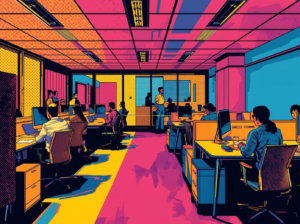
The neurotypical workplace.
The meeting starts before the meeting. Someone has already rehearsed what they are going to say. They have run through different versions in their head, adjusting tone, shortening sentences, softening directness. By the time they speak, the idea has been shaped more by how it will be received than what it actually is.
After the meeting ends, it does not end.
They repeat what they said.
What they did not say. What they should have said.
An email arrives. It is read once, then again. The reply is written, edited, softened, and reread. Is it too direct? Too vague? Too much? Not enough?
Across the day, there is a second layer of work running quietly in the background. Monitoring. Adjusting. Translating. None of it appears in performance metrics.
None of it is acknowledged in feedback.
But it is happening. Constantly.
This is invisible labour.
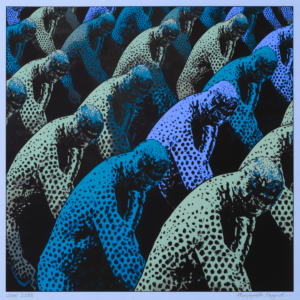
Behind the scenes, there is a layer of work that most organisations never see. It does not appear in job descriptions, performance reviews, or productivity metrics.
Yet it shapes how work gets done every single day. For many neurodivergent employees, a significant portion of their energy is spent not just on their role, but on navigating the environment around it. Adapting communication. Managing cognitive load. Regulating overwhelm while maintaining performance.
None of this is formally recognised. But all of it is real work.
The Cost No One Tracks
By the end of the day, the work is done. But so is the energy. Not just from the tasks themselves, but from everything wrapped around them. Ideas are held back because they are not ready “in time.” Contributions arrive later, or not at all. Capacity narrows, not because of capability, but because of the effort required to keep up with how work is expected to happen.
From the outside, it can look like hesitation. Or lack of confidence.
Inside, it is a constant calculation.
And over time, it compounds. Performance slows. Innovation tightens. Talent becomes quieter. Some people leave. Not because they cannot do the work, but because of how much extra work it takes to stay.
For organisations, this is not invisible at all.
It shows up in missed ideas, reduced output, disengagement, and the cost of replacing people who were already capable.
Invisible labour is not just a people issue.
It is a business risk.
The alternative neuroinclusive world at work.
Somewhere Else, the Same Meeting. The meeting starts. Some cameras are on, some are off. A few people speak straight away. Others type into a shared document. No one rushes. Silence holds for a moment, not awkward, just part of thinking. An idea appears in writing. It is read, expanded and returned to. Later, someone adds a comment. It is still part of the conversation. No one is trying to keep up with speed. They are working with it.
An email arrives. It is clear. Direct. No decoding required. The reply is written once. Sent.
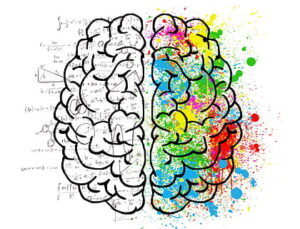 Across the room, people work differently. Some work from home and aren’t even in the physical office. They are able to work flexibly, and they have their own office in a remote location. Notably, their manager doesn’t insist on their presence in real life, being a testament to this company’s policy on being neuro-inclusive.
Here, there is no attempt at neurowashing [The deceptive practice of using
 neuroscience buzzwords or superficial, performative
 neurodiversity initiatives to boost corporate image
 without making genuine, structural changes to support
 neurodivergent individuals.]
The manager doesn’t say I’m in the office in person, so everyone has to be there. Instead, there is trust that the work will be done without any micro management. Using Neuroinclusion, the active practice of creating environments, systems, and cultures that welcome, accommodate, and value people of all neurological types (e.g., autism, ADHD, dyslexia). This company moves beyond mere diversity representation to redesigning environments, so neurodivergent individuals can thrive without being forced to mask or suppress their natural neurology.
Back in the head office, headphones on. Moving between spaces. Sitting in stillness. No one explains. No one needs to. In the review, the focus is not on who spoke the most.
It is on what changed because of them.
The pattern they noticed. The idea shifted direction. The depth they brought. There is no second layer running underneath. No constant adjustment. No quiet translation. Energy goes into the work itself. The Difference Is Design.
The difference between these
two worlds is not the people.
It is the system.
Many organisations still operate on the belief
that treating everyone the same is fair.
But sameness is not inclusion.
Standardised expectations around communication, pace, and visibility create a narrow definition of what “good” looks like. And anyone outside of that carries the cost of adapting. The shift is not about adding accommodations at the edges. It is about redesigning how work happens at the core. Moving from standardisation to intentional flexibility. When Invisible Labour Disappears. When that shift happens, something changes.
The rehearsal stops.
The over-editing has reduced. The second-guessing fades. Communication becomes clearer. Psychological safety increases. Performance becomes more sustainable and more visible. Energy is no longer spent on fitting in. It is spent on contributing. Teams move more efficiently. Ideas surface more easily. People stay longer.
And the impact reaches the bottom line.
When friction is removed, productivity increases.
When talent is fully utilised, innovation expands.
When people are not burning out, retention improves.
This is not just inclusion. It is performance. A Different Question: If this invisible labour is happening in your organisation, it is likely going unnoticed. But it is there. In the pauses. In the drafts that never get sent. In the ideas that arrive too late to be heard. So the question is not whether it exists.
For leaders, this is not about adding more initiatives.
It is about identifying where your systems are creating
unnecessary effort, and removing it.
This is the work we do with organisations at Empauher,
mapping where invisible labour exists and redesigning
systems to unlock performance.
What is your organisation doing to reduce it?
#Neuroinclusion #InclusiveLeadership #WorkplaceStrategy #FutureOfWork #LeadershipDevelopment #PeopleAndCulture #HRStrategy #OrganisationalDevelopment #EmployeeExperience #PsychologicalSafety #NeurodiversityAtWork