Bold pop art washing machine with vibrant retro colour bursts.
Executive Dysfunction Is Not Laziness: Learn how ADHD, autism, burnout, and overwhelm affect neurodivergent people at work and home.
Executive dysfunction is a difficulty with the brain’s self-management systems, including planning, task initiation, emotional regulation, organisation, and working memory. It commonly affects people with ADHD, autism, trauma, burnout, and chronic stress. I’ve spent years coaching neurodivergent adults who believed they were failing at life when they were actually experiencing cognitive overload.
Why Executive Dysfunction Is Not Laziness
Executive dysfunction is often misunderstood as laziness, disorganisation, or lack of motivation. For many neurodivergent people, however, it is a complex interaction between overwhelm, sensory processing, emotional regulation, ADHD, autism, burnout, and difficulties with task initiation.
From workplace stress to household responsibilities, even small practical problems can quickly spiral into cognitive overload. What may appear irrational on the surface is often a nervous system struggling to process overwhelm inside systems that were never designed for neurodivergent brains. “Research consistently shows that neurodivergent employees are more likely to experience burnout when working in environments with high sensory demands, unclear expectations, and limited psychological safety.
The “washing machine effect” is one example of this experience — the spinning sensation of endless tasks, decisions, interruptions, and emotional labour that can leave people feeling trapped in cycles of burnout and shutdown. Key findings from Brain in Hand’s research into neurodiversity in the workplace show that just 27% of autistic employees receive professional support for their needs. A neurodiverse team must embrace neurodivergent people, yet according to our research, 30% more productive than those without them.
Understanding executive dysfunction requires moving beyond shame and productivity myths towards more compassionate, neuroinclusive systems of support.
If executive dysfunction, burnout, or overwhelm are affecting your work or daily life, you can explore coaching and neuroinclusive workplace support through Empauher. You can also stay informed through Transformative Systems Tuesdays on the Empauher YouTube channel, where we explore neurodiversity, inclusion, burnout, and sustainable ways of working.
Executive Dysfunction in Neurodivergent Adults: Why Small Tasks Become Overwhelming.
There is a particular kind of neurodivergent experience where a small practical issue slowly transforms into a full existential event. Not because anyone wants it to, but because neurodivergent brains often process:
emotion
sensory information
uncertainty
stress
overwhelm
and executive functioning
all at once, which is how a washing machine can accidentally become a psychological thriller? Or a chance to understand how overwhelm can quietly take over everyday life.
The Washing Machine Story
Last year, in 2025, for Christmas, I was in Morocco trying to have what I imagined would be a peaceful, transformative experience. I was there for adventure, personal reflection, to experience the illusion of inner calm, savouring Moroccan mint tea and desert sunsets.
Pop art desert sunset featuring bold graphic shapes, vibrant electric oranges, and striking high-contrast colours inspired by retro pop art aesthetics.
Then I received a message from my pet sitter at home:
“Ginny… your washing machine smells funny.”
Now first of all: Why was your face inside the washing machine?
That already felt like an unusually committed relationship with a domestic appliance. But she was serious.
“I can’t use it.”
“Why?”
“Because I put my head inside and it smells strange.”
And immediately, my brain split into two separate operating systems.
One side was practical: “Run a cleaning cycle.”
Pop art style mint tea illustration with vibrant colours and bold graphic contrasts inspired by retro pop art aesthetics.
The other side, the neurodivergent side, became fascinated because once a neurodivergent brain notices something sensory, emotional, or slightly “off”… It can become impossible to let go of it mentally.
Suddenly, the washing machine was no longer a washing machine.
It was:
contaminated
emotionally charged
suspicious
psychologically unsafe
And now we were all in a relationship with it. At one point, I found myself stress-texting from the Sahara Desert, trying to mediate emotionally between a woman and a domestic appliance. Which, honestly, is a sentence that perfectly captures executive dysfunction.
Stylised pop art desert sunset featuring bold colours, graphic shapes, and dramatic retro-inspired skies.
Executive dysfunction refers to difficulties with the brain’s management systems.
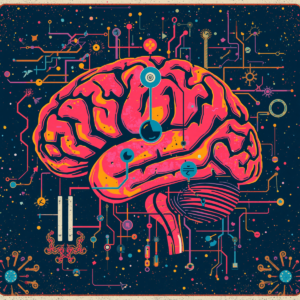
Vibrant pop art brain illustration exploring neural networks, cognitive functions, and management systems through bold graphic design.
This can affect:
task initiation
planning
prioritising
emotional regulation
organisation
time management
working memory
switching between tasks
decision-making
Executive dysfunction is commonly associated with:
ADHD
autism
burnout
anxiety
trauma
sensory overwhelm
chronic stress
For many neurodivergent people, the issue is not knowing what needs to be done. The issue is translating intention into action while managing an overloaded nervous system. This is why executive dysfunction is not laziness. Laziness implies Executive dysfunction, often looking more like caring so much that the nervous system becomes overwhelmed trying to process everything simultaneously.
What Do Neurodivergent People Struggle With in Everyday Tasks?
One of the most searched questions online is: “What do neurodivergent people struggle with?” The answer is rarely simple because neurodivergence affects people differently, but many neurodivergent people experience challenges around:
overwhelm
sensory processing
task initiation
transitions
communication
masking
emotional regulation
burnout
social expectations
inaccessible environments
And often these struggles are invisible.
From the outside, someone may appear:
disorganised
distracted
inconsistent
emotional
“too sensitive”
Internally, they may be managing:
cognitive overload
anxiety
sensory discomfort
perfectionism
nervous system dysregulation
fear of failure
The washing machine was never really about the washing machine. It became a container for overwhelm, and that is something many neurodivergent people understand deeply.
Workplace Triggers That Increase Executive Dysfunction
Neurodivergent people are not a monolith. This is why I did not notice the pet sitter was neurodivergent when I first met her before I left for Morocco.
Bold pop art monolith illustration with radiant sunburst patterns and dynamic graphic contrasts.
There is no single neurodivergent behaviour; however, many people may experience:
heightened emotional processing
hyperfocus
sensory sensitivity
communication differences
nervous system overload
difficulty filtering information
intense attention to detail
task paralysis
difficulty transitioning between activities
What appears “irrational” externally is often a nervous system trying to manage too much information at once.
Sometimes, neurodivergent people do not say: “I’m overwhelmed.” Sometimes they say:
“The lighting feels wrong.”
“I can’t focus because the sound is annoying.”
“That email changed tone.”
“The washing machine smells strange.”
Often, the object becomes safer to discuss than the emotion underneath it.
The Corporate Relevance: The Workplace Washing Machine Effect
This matters far beyond household appliances, because workplaces are full of metaphorical washing machines, with small unresolved issues that can become enormous sources of cognitive and emotional overload for neurodivergent employees.
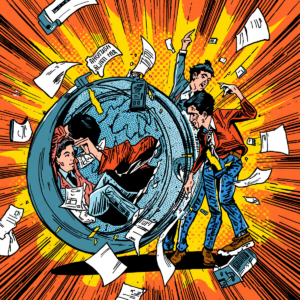
Pop art depiction of workplace burnout and endless task-switching through chaotic motion, vibrant colours, and comic-style aesthetics.
Common Workplace Triggers for Executive Dysfunction
Leaders should pay particular attention to workplace conditions that increase cognitive load and nervous system stress, including:
unclear instructions
constant Slack notifications
vague deadlines
sensory-heavy office environments
unexpected schedule changes
inaccessible communication
unclear priorities
emotionally unsafe cultures
How Employers Can Support ADHD, Dyslexic and Autistic Employees
Watch out for key signs that Neurodivergent employees are often expected to simply
“push through”
and don’t judge quickly without stepping back to reflect. The environments that create continuous nervous system stress are common. Then, when overwhelm appears externally, it is often misread as:
poor attitude
lack of resilience
incompetence
laziness
being “difficult”
But many neurodivergent employees are already spending enormous energy:
masking
self-monitoring
regulating emotions
filtering sensory input
managing overwhelm
trying to appear professional
Eventually, the nervous system reaches capacity. And often what looks like a “small issue” is actually accumulated overload.
The washing machine was never just the washing machine. And workplace conflict is often not just about:
the email
the meeting
the feedback
the noise
the task
It is about nervous system capacity and often burnout.
Pop art depiction of the workplace washing machine effect and the chaos of modern work.
What Does Neurodivergent Burnout Look Like?
Neurodivergent burnout can include:
exhaustion
shutdown
inability to initiate tasks
emotional overwhelm
sensory sensitivity
reduced functioning
communication difficulties
withdrawal
anxiety
brain fog
Many neurodivergent professionals spend years over-performing inside systems that were never designed for them. The cost of masking and adapting accumulates over time.
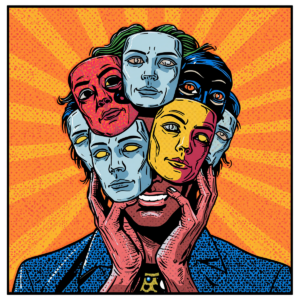
Pop art exploration of masking, identity, and the emotional toll of hiding one’s authentic self.
And eventually the nervous system says:
“No more.”
This is why neuro-inclusive leadership matters, because burnout is not always caused by inability.
Often, it is caused by prolonged unsupported adaptation.
How Can Workplaces Support Neurodivergent Employees?
Neuro-inclusive workplaces are not built through performative inclusion statements. They are built through practical systemic support.
This can include:
clear communication
realistic deadlines
reduced sensory overload
flexibility
written instructions
psychological safety
predictable structures
reduced unnecessary urgency
body doubling or accountability support
compassionate leadership
The goal is not to “fix” neurodivergent people but to reduce unnecessary friction between people and systems, because people thrive when environments become more accessible.
Final Thoughts
The older I get, the more I realise neurodivergence is often about amplification.
Minor things become major. Small discomforts become emotional concepts. A washing machine becomes a relationship dynamic.
And honestly? Sometimes that is exhausting, but sometimes it is also deeply human.
Portrait of Ginny Evans-Pollard in a calm indoor setting with natural light and soft greenery in the background.
Underneath the humour, many neurodivergent people are simply trying to navigate systems that were never designed for how their brains process the world. Executive dysfunction is not laziness.It is the gap between intention and action.
And people do not bridge that gap through shame.
They bridge it through:
understanding
support
accessibility
psychological safety
and compassionate systems
Also: clean your washing machine. REGULARLY.
If executive dysfunction, neurodivergent burnout, or workplace overwhelm are affecting your life or organisation, explore coaching, workplace consultancy, and neuro-inclusive support through Empauher.
Mini Bio
Ginny Evans-Pollard is the founder of Empauher, a neurodiversity and LGBTQIA+ inclusion consultancy supporting individuals and organisations in building sustainable, neuroinclusive workplaces. With over 20 years of experience in education, coaching, and leadership development, she specialises in ADHD, executive functioning, neurodivergent burnout, workplace inclusion, and psychological safety. Her work combines lived experience with practical organisational strategies to help people and teams move from masking and survival toward sustainable ways of working.
FAQ
What is executive dysfunction?
Executive dysfunction refers to difficulties with planning, task initiation, emotional regulation, organisation, and decision-making.
Is executive dysfunction the same as laziness?
No. Executive dysfunction is linked to cognitive overload, ADHD, autism, burnout, and nervous system overwhelm rather than lack of motivation.
What does executive dysfunction feel like?
Many people describe executive dysfunction as feeling mentally “stuck,” overwhelmed, or unable to begin tasks despite wanting to complete them.
Can neurodivergent burnout affect work performance?
Yes. Neurodivergent burnout can impact communication, concentration, emotional regulation, and task completion in workplace environments.