Once upon a time, in a kingdom proud of its progressiveness, the rulers of the Great Glass Hall announced that everyone was welcome to leadership training, but like many fairytales, this story reflects something painfully real about neuro-inclusive workplaces. Many neurodivergent and LGBTQIA+ professionals experience a hidden form of workplace exclusion: being included symbolically while remaining excluded from real decision-making power. In many organisations, diversity and inclusion initiatives increase visibility without redistributing authority, leadership opportunities, or psychological safety. This invisible barrier is what I call the Plexiglass Ceiling.
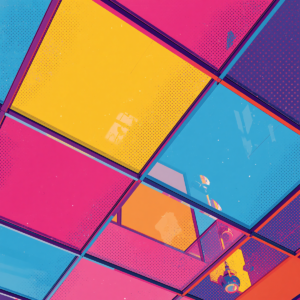
Abstract artwork representing the Plexiglass Ceiling, workplace inclusion, and neurodiversity, and invisible leadership barriers through layered transparent coloured panels.
This is a story about a kingdom, but perhaps not only a kingdom. The kingdom had changed, they said. No longer would only the loudest voices sit near the throne. No longer would leadership belong solely to those born into old systems and familiar ways of speaking. Now the kingdom celebrated differences and workplace inclusion. The pattern-seers were invited in. The shapeshifters. The sensitive ones. The people who questioned rules nobody else noticed. The storytellers, the people who saw systems beneath surfaces with neurodiverse insight. The ones who spoke with honesty instead of performance. The rulers smiled warmly as they opened the gates, offering everyone access to workplace coaching.
“You belong here,” they said.
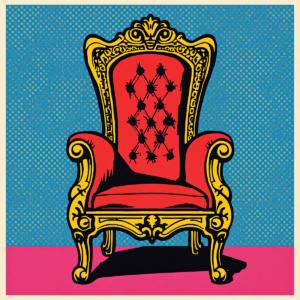
Pop art style illustration of an ornate throne with bold pink, purple, yellow, and cyan colours, symbolising workplace leadership, visibility, and the Plexiglass Ceiling in neuroinclusive workplaces.
Building Neuroinclusive Leadership Cultures
And for a while, it felt true. The kingdom placed unusual people on posters and banners. They invited them to banquets. They asked them to speak on panels inside the Great Hall. Sometimes they were even seated close enough to glimpse the council chambers above. But over time, some began noticing something strange.
The doors to real power remained closed.
Not locked visibly. Not guarded openly. No one explicitly said: “You cannot lead.”
Instead, the barriers were transparent.
Invisible enough to deny. Solid enough to stop movement. And so the people kept climbing. They attended meetings. Shared ideas. Offered emotional labour. Helped redesign broken systems. Mentored struggling workers. Translated difficult conversations. Held communities together. Softened conflicts. Brought creativity into spaces that had long forgotten imagination.
The rulers praised them endlessly.
“What an important perspective. You bring such insight. We value your lived experience.”
Yet somehow, when promotions arrived…when resources were distributed…when leadership structures were redesigned…the same people remained outside the upper towers
.
Visible. Respected. Included. But not powerful.
Performative Inclusion vs Genuine Workplace Equity
There’s a particular kind of exclusion that rarely gets named. Not the obvious exclusion of being denied entry. Not the overt discrimination organisations are trained to avoid. Not even the visible “glass ceiling” prevents progress entirely.
This exclusion is quieter.
You are invited into the room. Consulted. Welcomed onto panels, advisory boards, brainstorming sessions, and diversity initiatives. You become visible enough to symbolise inclusion. But when authority is distributed, your influence disappears. You are present, but not powerful. This is the Plexiglass Ceiling. Transparent barriers that allow visibility without genuine access to power.
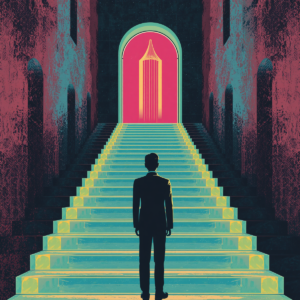
Pop art style image of a silhouetted figure before transparent staircases leading to a glowing council chamber, symbolising the Plexiglass Ceiling and the experience of being visible in workplaces while excluded from real power.
The reality of not totally understanding many unwritten rules.
In the Kingdom of Glass Hall, there were many unwritten rules. Some people understood them instinctively. How long to hold eye contact? When to soften a disagreement into diplomacy. How to speak confidently without sounding “too intense.” How to present ideas without disrupting the comfort of those already in authority. Others learned these rules through survival. Some became shapeshifters. They rehearsed conversations before meetings. Copied communication styles.
Suppressed sensory overwhelm. Smiled through exhaustion. Translated themselves into something more acceptable.
Over time, many forgot what their original voice sounded like.
The kingdom called this professionalism. But outside the fairytale, many neurodivergent and LGBTQIA+ professionals know this experience intimately.
Traditional workplace systems continue to reward:
- performative confidence
- social conformity
- networking over substance
- hierarchy over collaboration
- masking over authenticity
As a result, many people are welcomed for their creativity, emotional intelligence, and innovation, while being quietly excluded from decision-making authority.

Pop art style artwork representing unwritten workplace rules through vibrant social symbols, gestures, and visual cues, symbolising masking, conformity, and invisible barriers to inclusion and leadership.
The modern workplace often celebrates diversity aesthetically while resisting the redistribution of power that real inclusion requires.
The Plexiglass Ceiling survives because visibility is easier than structural change.
Representation photographs well. Diversity panels create positive branding. Awareness campaigns appear progressive. But redistribution of power asks harder questions.
Who controls resources?
Whose communication style is treated as “professional”?
Who receives mentorship versus sponsorship?
Who is repeatedly consulted but never promoted?
Who carries emotional labour while others retain authority?
Who feels psychologically safe disagreeing with leadership?
These questions often reveal something uncomfortable:
Many organisations want inclusion that does not disrupt existing systems.
They want a difference that remains manageable. Innovation that remains non-threatening. Authenticity that does not challenge hierarchy. The kingdom loved unusual minds during festivals. But inside the council chamber, originality suddenly became “too disruptive.” Living beneath the Plexiglass Ceiling can create profound emotional exhaustion. Because the barrier is transparent, people often struggle to name it.
After all. You were invited. You were included. You were heard. Weren’t you?
And so people begin turning the confusion inward.

“Maybe I’m asking for too much.”
“Maybe I’m not leadership material.”
“Maybe I should communicate differently.”
“Maybe if I worked harder…”
Meanwhile, they continue mentoring others, holding teams together emotionally, educating colleagues, and building community while remaining structurally peripheral. Emotionally central. Institutionally excluded. Valued socially. Excluded systemically.
But perhaps the problem was never that some people could not lead. Perhaps the kingdom had mistaken obedience for wisdom.
Perhaps the problem is that workplaces continue to reward those who protect hierarchy over those who reimagine it.
And perhaps genuine inclusion requires something far more radical than representation.
Not just inviting different people into the room. But redesigning the room itself.
Real inclusion means:
- accessible leadership pathways
- valuing multiple communication styles
- recognising lived experience as expertise
- creating environments where people can participate without masking themselves into exhaustion
Lived experience is not decoration. Not branding. Not unpaid emotional labour.
It is expertise.
At the end of the old fairytale, the rulers believed the kingdom’s strength came from protecting the towers. But slowly, the people beneath the Plexiglass Ceiling began imagining something else. Not taller towers. No clearer barriers.
A different kingdom entirely.
One where leadership was not built on performance, hierarchy, and proximity to power, but on collaboration, accessibility, authenticity, and care.
Perhaps that is where the future of work truly begins.
Final Thought
Perhaps the unusual minds were never failing the kingdom.
Perhaps the kingdom simply mistook sameness for competence.
ADHD, dyslexia, autism, and other neurodivergent ways of thinking were never the flaw in the system. The flaw was designing workplaces that demanded conformity in exchange for belonging.
For too long, organisations have rewarded performance over authenticity, masking over wellbeing, hierarchy over collaboration, and obedience over imagination. Many people have spent years shrinking themselves to access safety, credibility, leadership, or acceptance inside systems that were never designed with them in mind.
But people are not broken for struggling inside environments that exhaust them.
The problem is not difference. The problem is the structure itself.
Real inclusion begins when workplaces stop asking people to translate themselves into something more acceptable just to survive the room. It begins when organisations redesign leadership, communication, and workplace culture around how human beings actually think, process, collaborate, and regulate.
Because when different ways of thinking are genuinely supported, not merely tolerated, something extraordinary becomes possible.
People stop surviving.
And begin leading.

If this resonates, you’re not alone, and you’re not the problem.
The financial, professional, and emotional costs of workplace culture are real, but they’re also systemic, predictable, and most importantly, addressable with the right support.
At Empauher, I work with individuals and organisations to unpack these hidden costs, build neuroinclusive strategies, and create ways of working that actually align with how your brain functions, not against it.
If you’re ready to move from survival mode to sustainable systems, you can book a coaching call or explore how we can work together.
Mini Bio
Ginny Evans-Pollard is the founder of Empauher, a neurodiversity and LGBTQIA+ inclusion consultancy that supports individuals and organisations in building sustainable, inclusive ways of working. With over 20 years of experience in education, coaching, and leadership development, she specialises in executive function, neuro inclusion, and the lived realities of ADHD in professional spaces. Her work focuses on turning insight into practical, systemic change—bridging the gap between personal experience and organisational transformation.