Should you disclose ADHD or autism at work? Explore masking, psychological safety, neurodivergent burnout, and workplace inclusion.
For many neurodivergent employees, disclosure is not simply a personal decision; it is deeply connected to psychological safety, workplace culture, masking, and fear of discrimination. This article explores why neurodivergent people often hide their differences at work, what emotional safety really means, and how organisations can create genuinely neuroinclusive workplaces where people no longer have to calculate the risk of authenticity.
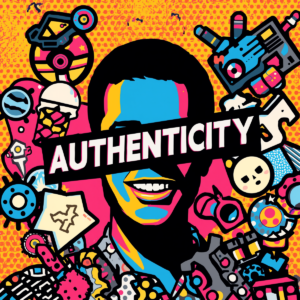
A bold pop art illustration exploring authenticity, emotional safety, and neurodivergent identity in the workplace. The image features a striking central portrait surrounded by layered cultural icons, speech bubbles, abstract shapes, office symbolism, and expressive visual elements representing masking, disclosure, identity, and self-expression. Vibrant colours, graphic contrasts, comic-style textures, and dynamic compositions create an energetic yet emotionally reflective atmosphere. The artwork symbolises the tension between visibility and concealment, individuality and conformity, and the journey toward authentic self-expression in neuroinclusive workplaces.
For many neurodivergent employees, disclosure at work is not a simple question.
It is not just:
“Should I tell my employer I have ADHD?” “Should I disclose autism at work?”
Or:
“Should I tell people I’m neurodivergent?”
The deeper question is often:
“Will I still feel emotionally safe if I do?”
For many people, disclosure is not simply about honesty or authenticity. It is a risk calculation.
Is It Safe to Disclose Neurodivergence at Work?
Many workplaces publicly celebrate diversity and inclusion. But emotional safety is not created through policies alone. Neurodivergent employees often pay close attention to:
- How is the difference treated
- Who gets promoted
- Whether accommodations are respected
- How managers respond to vulnerability
- Whether people are judged for communication differences
- How mistakes, sensory needs, or burnout are interpreted
If employees fear being viewed as:
- “too emotional”
- “unprofessional”
- “difficult”
- “disorganised”
- “high maintenance”
- “not leadership material”
Then disclosure may not feel safe. This is why many ADHD and autistic employees choose not to disclose at work. Not because they are ashamed.
But because previous experiences have taught them to be cautious.
Why Do Neurodivergent Employees Mask at Work?
Workplace masking happens when neurodivergent people consciously or unconsciously hide traits to appear more socially acceptable or professionally acceptable.
This can include:
- forcing eye contact
- suppressing stimming
- scripting conversations
- over-monitoring tone of voice
- hiding sensory overwhelm
- copying workplace behaviours
- pretending to cope
- working excessively to compensate for executive functioning challenges
Masking is often misunderstood as professionalism.
But in reality, prolonged masking can be exhausting.
Many neurodivergent employees spend enormous mental energy trying to avoid judgment, discrimination, exclusion, or career penalties.
What Is Psychological Safety at Work?
Psychological safety means people feel safe enough to:
- speak honestly
- ask for help
- communicate differently
- make mistakes
- express needs
- contribute ideas
- exist authentically without fear of humiliation or punishment
For neurodivergent employees, emotional safety at work is deeply connected to whether people feel able to unmask safely.
Without psychological safety, workplaces often create cultures of hypervigilance instead of inclusion.
Employees begin constantly monitoring:
- how they speak
- how they move
- how they appear
- whether they are “too much”
- whether they are “performing professionalism” correctly
What Happens When Workplaces Are Not Psychologically Safe?
When workplaces are emotionally unsafe, neurodivergent employees often experience:
- chronic stress
- burnout
- masking fatigue
- anxiety
- shutdown
- overwhelm
- disengagement
- isolation
- reduced creativity
- lower wellbeing
Over time, many employees begin surviving rather than thriving.
This is one reason neurodivergent burnout is increasingly common.
What Does Neurodivergent Burnout Look Like?
Neurodivergent burnout is more than ordinary workplace stress.
It is often the result of prolonged masking, sensory overload, emotional exhaustion, lack of accommodations, and constantly adapting to environments that were not designed for cognitive diversity.
Burnout may look like:
- exhaustion that rest does not fix
- emotional numbness
- shutdowns or meltdowns
- difficulty communicating
- increased sensory sensitivity
- loss of executive functioning capacity
- withdrawal from social interaction
- reduced productivity
- anxiety or depression symptoms
Many neurodivergent people are not burning out because they are incapable, but due to their navigating systems that require constant self-suppression.
Why Do Employees Hide Their Neurodivergence?
People often assume disclosure is simply about confidence.
But many neurodivergent employees have experienced:
- bullying
- discrimination
- exclusion
- invalidation
- being underestimated
- ableism
- career stagnation
- social rejection
As a result, hiding neurodivergence can become a protective strategy.
The problem is not the individual, but the challenge is often rooted in organisational structures.
What Makes a Workplace Neuroinclusive?
A neuroinclusive workplace recognises that people think, process, communicate, and regulate differently.
Rather than forcing everyone into one narrow model of professionalism, neuroinclusive organisations create flexibility and emotional safety.
This can include:
- sensory-aware environments
- flexible communication styles
- clearer expectations
- inclusive leadership practices
- reduced stigma around accommodations
- psychologically safe management
- ]flexible working structures
- accessible meetings and systems
- trauma-informed leadership approaches
Different brains are not the problem. Rigid systems are.
Neuroinclusive leadership is not about “fixing” neurodivergent people.
It is about redesigning systems so more people can thrive.
How Can Workplaces Support Neurodivergent Employees?
Supporting neurodivergent employees begins with emotional safety, not performative inclusion, or neuro-washing, token gestures, or pressure to disclose.
Real inclusion means creating cultures where people no longer have to constantly assess the risk of being themselves.
Leaders can begin by asking:
- Do employees feel safe communicating differently?
- Are accommodations normalised?
- Do managers understand masking and burnout?
- Are leadership expectations neurotypical by default?
- Do employees feel psychologically safe enough to be honest?
True inclusion is not about visibility metrics. It is about creating environments where authenticity feels safe.
Written by Ginny Evans-Pollard, Founder of Empauher
Empauher supports organisations in building neuroinclusive and LGBTQIA+ inclusive workplaces through training, coaching, workplace audits, and transformational culture change.

If this resonates, you are not alone, and you are not the problem.
The emotional, professional, and financial costs of masking and unsupported workplace cultures are real, but they are also systemic and addressable.
At Empauher, I support individuals and organisations in building neuroinclusive systems that reduce burnout, improve psychological safety, and create sustainable ways of working.
Whether you are navigating ADHD, autism, workplace burnout, or inclusive leadership challenges, support is available.
You can book a coaching call or explore how we can work together to create environments where people no longer have to survive at work to succeed.
Mini Bio
Ginny Evans-Pollard is the founder of Empauher, a neurodiversity and LGBTQIA+ inclusion consultancy supporting individuals and organisations in building sustainable, neuroinclusive workplaces. With over 20 years of experience in education, coaching, and leadership development, she specialises in ADHD, executive functioning, neurodivergent burnout, workplace inclusion, and psychological safety. Her work combines lived experience with practical organisational strategies to help people and teams move from masking and survival toward sustainable ways of working.